
Services
Electrical work is not simply installation; it is the coordination of capacity, load, sequencing, and long-term performance within the realities of a specific property.
Each project begins with an evaluation of existing infrastructure, future intent, and practical constraints. Systems are engineered and installed for real-world conditions, not theoretical maximums.
Right-Sized Infrastructure
Right-sized infrastructure begins with accurate load evaluation and disciplined sequencing. Systems are proportioned to actual use, coordinated with construction timing, and installed with attention to long-term performance in Florida’s climate.
The following primary feeder installation illustrates this approach in practice.
Primary Feeder Installation - Martin County, Florida
Power Established
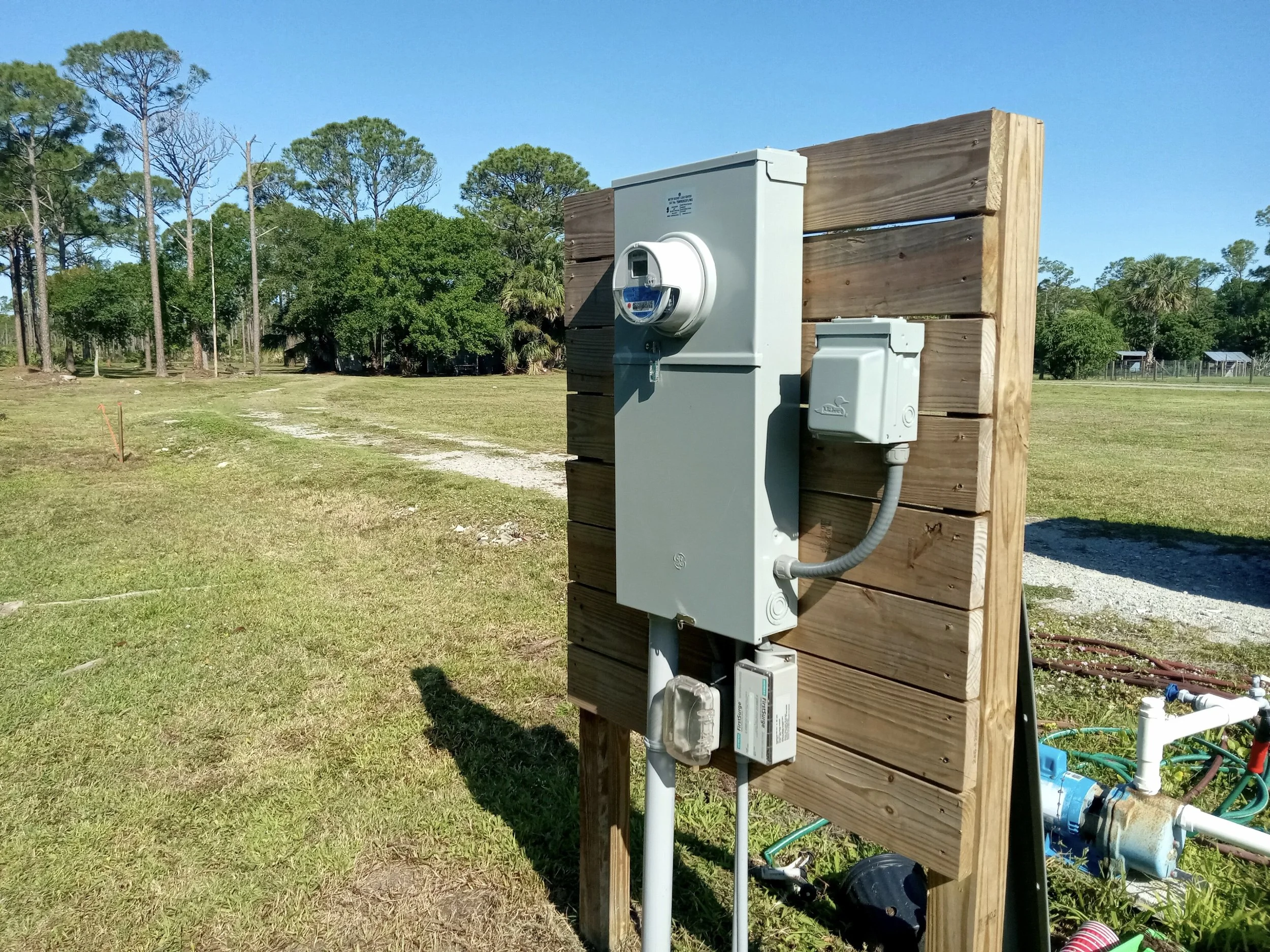
Power becomes available before anything else is built. Once the meter is set and energized, the land shifts from anticipation to readiness. Nothing dramatic appears to change, yet the condition of the site is fundamentally different. Electricity is no longer a future dependency. It is present, stable, and controllable.
An existing well and pump that had relied on a generator can now operate directly from the service. Irrigation and water access become continuous rather than temporary.
Nearly a year passed before construction began. With power already established, the site could support waiting and decision-making without pressure. Infrastructure was in place.
Distribution Extended
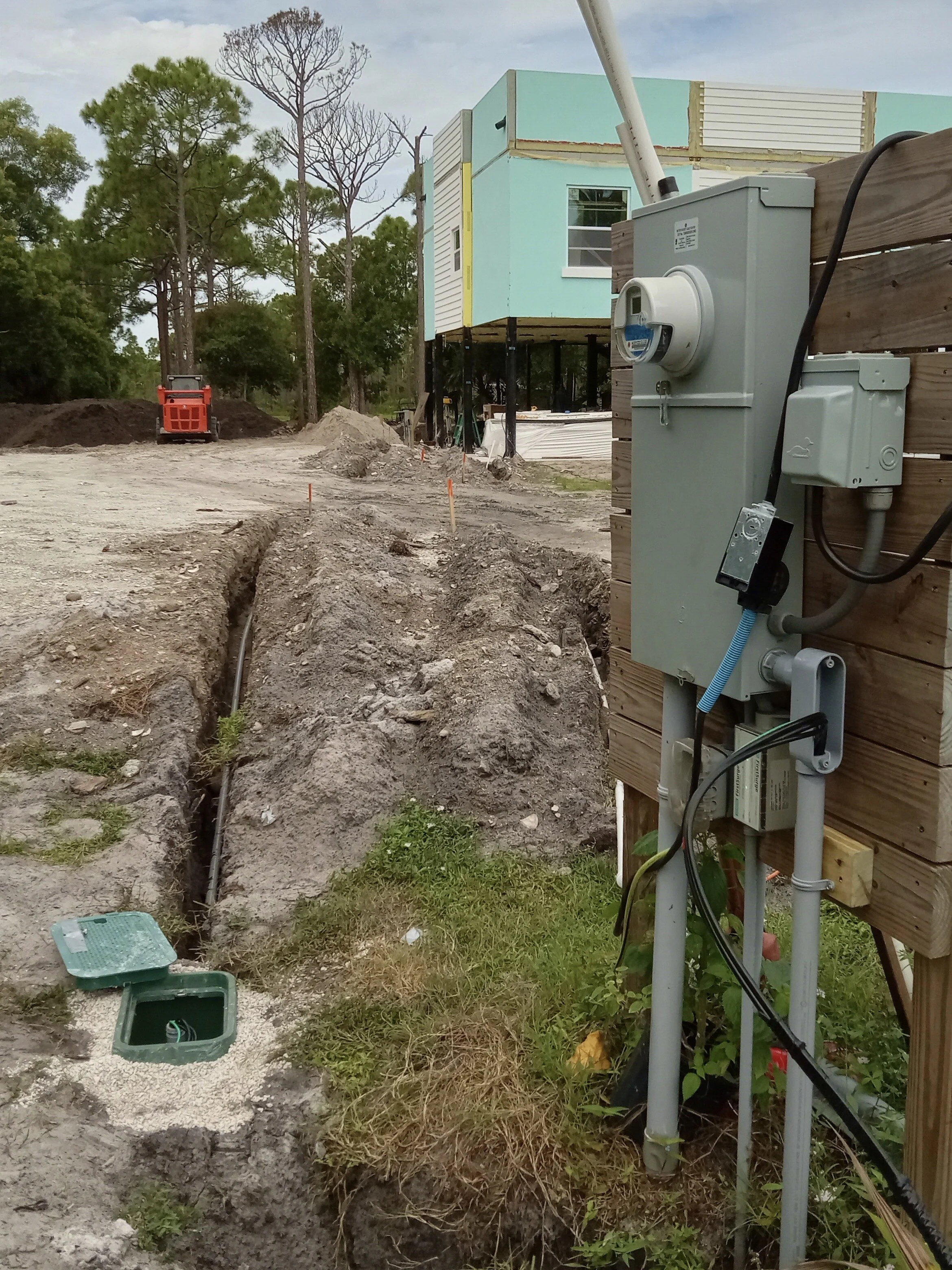
With power established at the interface, distribution moves deliberately into the field. Routing is planned with distance, voltage drop, and geometry in mind. The trench reflects proportion rather than excess. Conduit depth and layout respond to the fact that this work now occurs on the load side of the meter, where scale remains controlled.
Pull points resolve changes in direction without forcing escalation. Geometry is managed directly. Friction remains predictable. The installation proceeds without oversizing materials or equipment.
Proportioned Defined
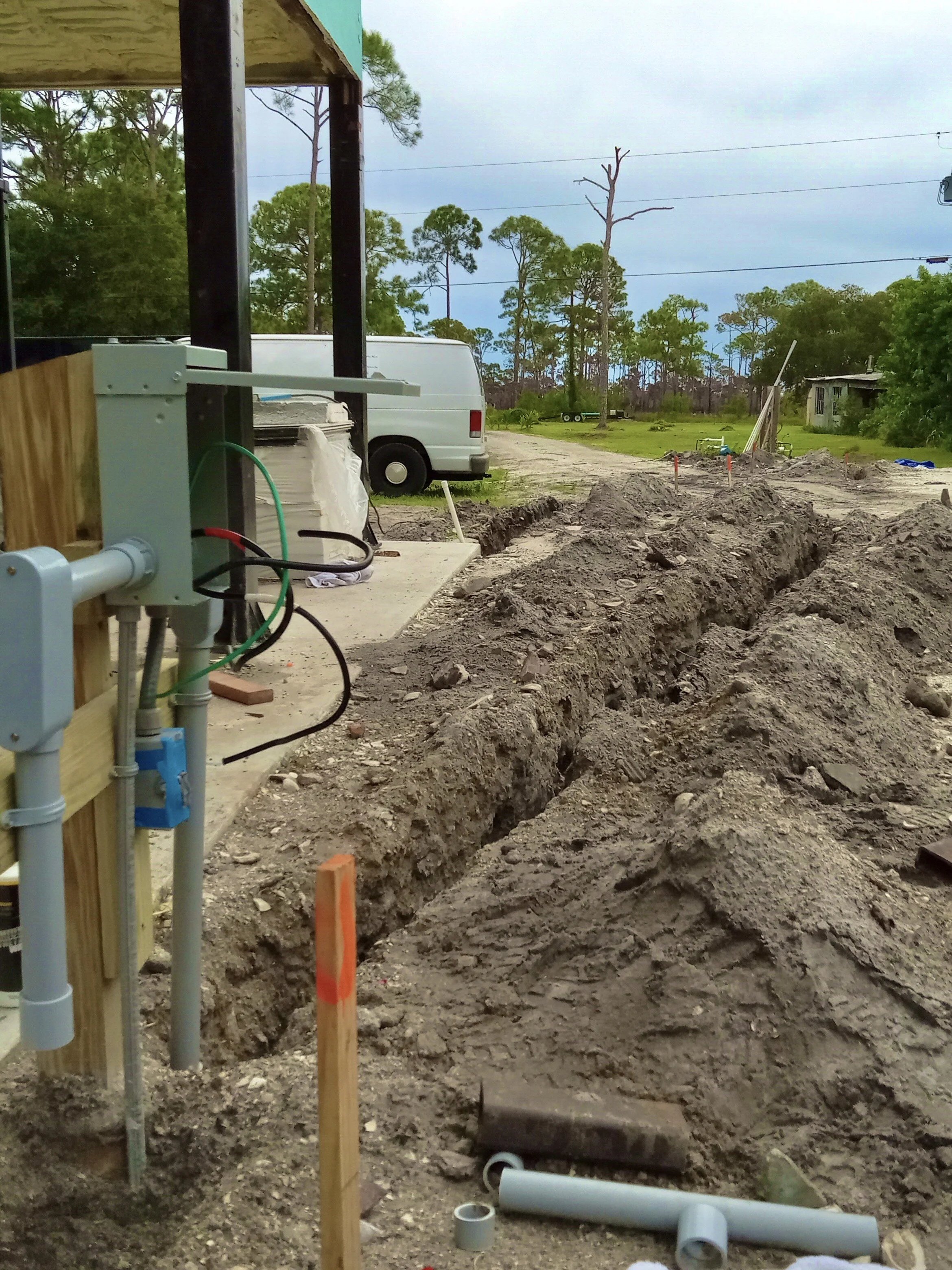
Here the feeder becomes legible as a complete assembly. Conductors are sized for the actual distance traveled and the load expected, not for a theoretical maximum. A 125-amp feeder is drawn from a 200-amp service, preserving compatibility at the utility interface while activating only what is needed downstream. Right-sized infrastructure becomes visible in physical form.
Capacity exists upstream. Proportion governs downstream.
Structure Integrated
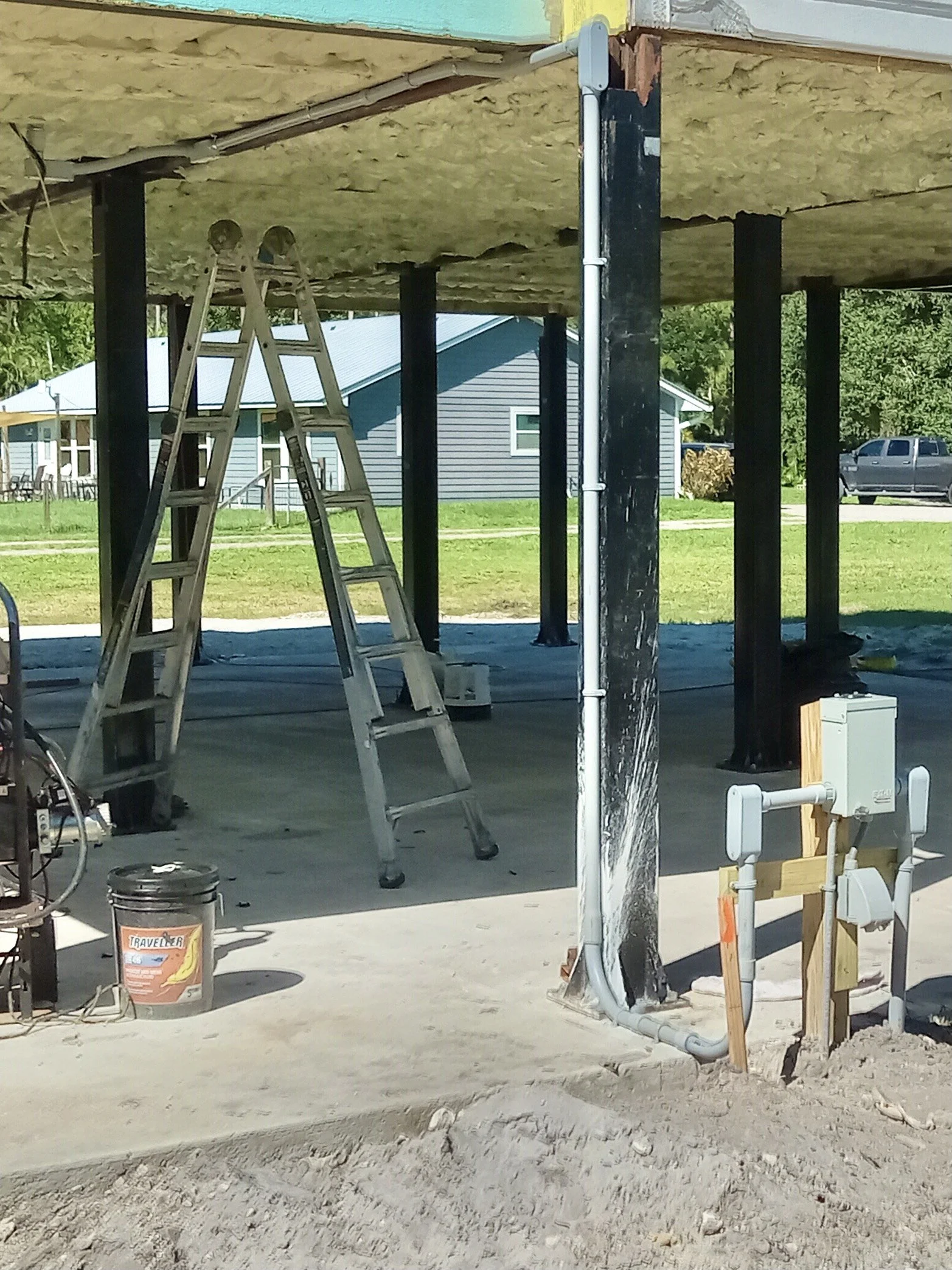
Distribution enters the dwelling as site logic transitions into architectural reality. The conduit aligns to framing, elevation, and structure as they exist in the field. Adjustments are resolved in place. The system accommodates constraint because it was never oversized to begin with.
Power enters the building and adapts to its unique geometry.
Distribution Established
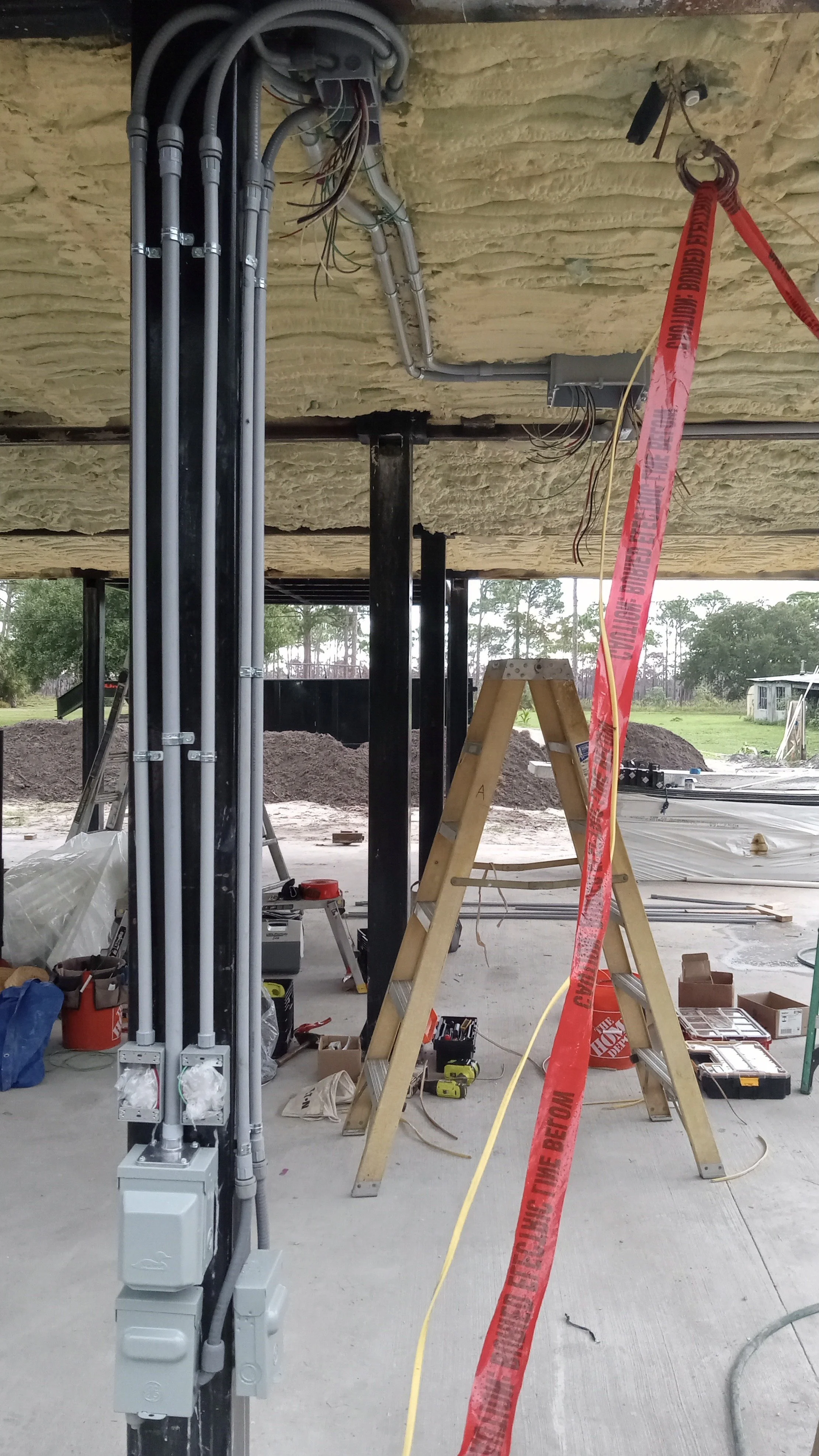
With the feeder integrated into the structure, distribution now serves the dwelling directly. Circuit pathways are resolved in the field, proportion maintained, and capacity translated into usable power. The system is complete and operational.